Learn how to reduce night driving risk. Discover what "High Risk Miles" are, why nighttime crashe...
This is Operation Safe Driver Week: How to Prepare
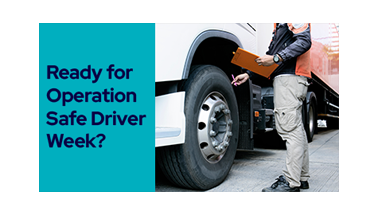
The Commercial Vehicle Safety Alliance (CVSA) will conduct its annual Operation Safe Driver Week from July 12 through July 18. This weeklong traffic-enforcement and education initiative is designed to reduce unsafe driving behaviors among both commercial motor vehicle and passenger vehicle drivers. During the campaign, law enforcement agencies across North America will increase patrol activity and focus on drivers displaying reckless, careless, or dangerous behaviors.
Operation Safe Driver Week is not an inspection-focused event like International Roadcheck. Instead, officers will be actively observing traffic behavior and conducting stops when they identify unsafe driving practices. Drivers may receive warnings or citations, and serious violations can have operational, safety, and regulatory consequences for fleets.
What Law Enforcement Will Be Watching For
During Operation Safe Driver Week, law enforcement officers will focus on unsafe driving behaviors by both commercial and passenger vehicle drivers, including speeding, aggressive driving, distracted driving, following too closely, improper lane changes, failure to obey traffic-control devices and seat belt violations.
Speeding and aggressive driving remain primary enforcement priorities during Operation Safe Driver Week.. Drivers should obey posted speed limits, adjust their speedfor weather, road, and traffic conditions, maintain a safe following distance, and avoid aggressive behaviors such as weaving through traffic, tailgating, or making abrupt lane changes. rofessional drivers should maintain adequate following distance, anticipate traffic conditions ahead, and avoid allowing schedule pressure or congestion to influence driving decisions.
Distracted driving will also be a key enforcement focus during Operation Safe Driver Week. Texting, handheld phone use, interacting with electronic devices, eating, grooming, or any activity that removes a driver’s attention away from the road increases the risk of a crash. Whenever possible, drivers should set navigation, communication, and other in-cab technology before putting the vehicle in motion.Seat belt use remains an important enforcement issue. Drivers and front-seat occupants should wear a seat belt whenever the vehicle is in motion. Wearing a seat belt remains one of the simplest and most effective ways to reduce the risk of serious injury or death in a crash.
What Previous Years Tell Us
Operation Safe Driver Week results consistently show that unsafe driving behaviors remain common among both commercial and passenger vehicle drivers. In 2025, law enforcement officers in the United States and Canada stopped 8,739 vehicles during the campaign and issued 2,504citations and 3,575 warnings for unsafe driving violations. Commercial motor vehicle drivers received 3,230 warnings and 1,839 citations, demonstrating that CMV operators remain a primary enforcement focus during this annual safe-driving initiative.
Speeding was the most common violation identified during the 2025 campaign. Officers issued 1,249 warnings and 917 citations for speeding. Commercial motor vehicle drivers received 1,073 speeding warnings and 491 speeding citations, accounting for 86% of all speeding warnings issued during the campaign. Passenger vehicle drivers received 176 warnings and 416 citations for speed-related violations.
Seat belt violations were also a recurring concern. During the 2025 campaign, commercial motor vehicle drivers received 204 warnings and 248 citations for failure to wear a seat belt. Commercial drivers accounted for 93% of all seat belt warnings, and 94% of all t citations issued during the campaign.
These results reinforce an important point: enforcement is not limited to severe crashes or obvious reckless driving. Routine unsafe habits, including speeding, distracted driving, following too closely, and failing to use a seat belt, can result in roadside stops, citations, and increased crash risk.
How Fleets Can Prepare
Fleets should use the days leading up to Operation Safe Driver Week to reinforce safe-driving expectations with all drivers. Supervisors and safety personnel should emphasize that safe operation must remain the priority, even when drivers are facing delivery deadlines, traffic congestion, or customer pressure. Drivers should be reminded to maintain safe speeds, increase following distance in congested traffic and poor weather, use turn signals early, check mirrors before changing lanes, and remain alert for passenger vehicles operating unpredictably around commercial vehicles. Drivers should also avoid handheld device use, wear seat belts at all times, and obey all traffic-control devices.
Telematics, dash camera, and ELD data can be valuable tools during this period. Fleets should consider reviewing speeding events, harsh braking, following-distance alerts, distracted-driving events, lane-departure alerts, and other high-risk behaviors. Prompt coaching and documented corrective action can help reinforce expectations before unsafe behaviors result in a roadside stop, citation, or crash.
The CVSA website also provides several resources that fleet managers can share with drivers, including:
- Avoid Aggressive Driving
- 14 Defensive Driving Techniques for Commercial Motor Vehicle Drivers
- Defeat Distracted Driving
- Safety Tips Every Professional Driver Must Know
The Bottom Line
Operation Safe Driver Week is an opportunity for fleets to reinforce the everyday behaviors that protect drivers, the motoring public, and the company’s safety record. Drivers should understand that law enforcement presence will increase during the campaign and that unsafe driving behaviors will be actively observed and addressed.
Safe driving should not change because enforcement increases. Instead, Operation Safe Driver Week serves as a reminder that disciplined driving habits, including managing speed, maintaining following distance, , eliminating distractions, wearing seat belts, and making safe lane changes, are essential on every trip.
For more information about the campaign, visit CVSA’s Operation Safe Driver Week page.
Similar Posts Like This
Learn how to reduce night driving risk. Discover what "High Risk Miles" are, why nighttime crashe...